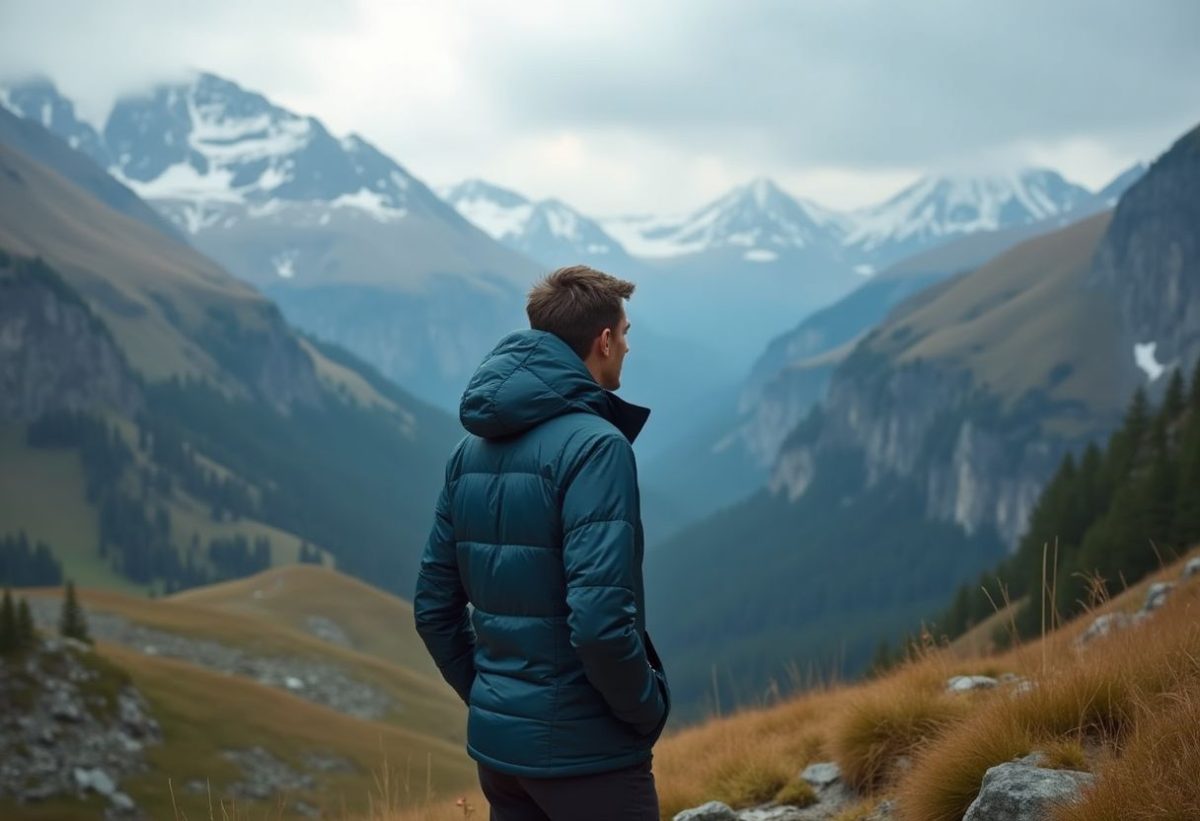
In light of the rise of outdoor activities and the growing interest in hiking, choosing an appropriate down jacket has never been more crucial. When it comes to hikes where the climate can be unpredictable and weather conditions extreme, the choice between a down jacket and a synthetic jacket becomes essential. Each has distinct advantages that will influence your comfort, warmth, and overall performance in the mountains.
The insulating properties of down and synthetic materials
Understanding the nature of the insulation provided by a jacket is fundamental. The filling materials have a direct impact on the warmth, weight, and compressibility of the jacket.
- Natural down: primarily sourced from geese and ducks, down is renowned for its exceptional ability to retain heat. Its three-dimensional structure creates air pockets that provide superior insulation. A down jacket is often lighter and more compressible, making it ideal for those seeking minimal bulk in their backpack.
- Synthetic: made from polyester fibers, synthetic jackets mimic the insulating qualities of down. Although slightly heavier, they retain their insulating ability even when wet, a major advantage in humid or rainy environments.
Durability and care of materials
The longevity of your jacket will depend on its material and the care it receives. Each type of jacket requires specific maintenance to ensure its durability and thermal performance.
- Down jacket: with proper care, down can last for several years. However, it requires meticulous attention, including machine drying with tennis balls to prevent the down from clumping. It is also preferable to use a specific detergent to avoid damaging the natural fibers.
- Synthetic jacket: less demanding, it can be washed more frequently without losing its insulating properties. The synthetic material is robust, better withstanding moisture and regular washing, making it a wise choice for intensive hikers or in varied weather conditions.
Choosing based on climatic conditions
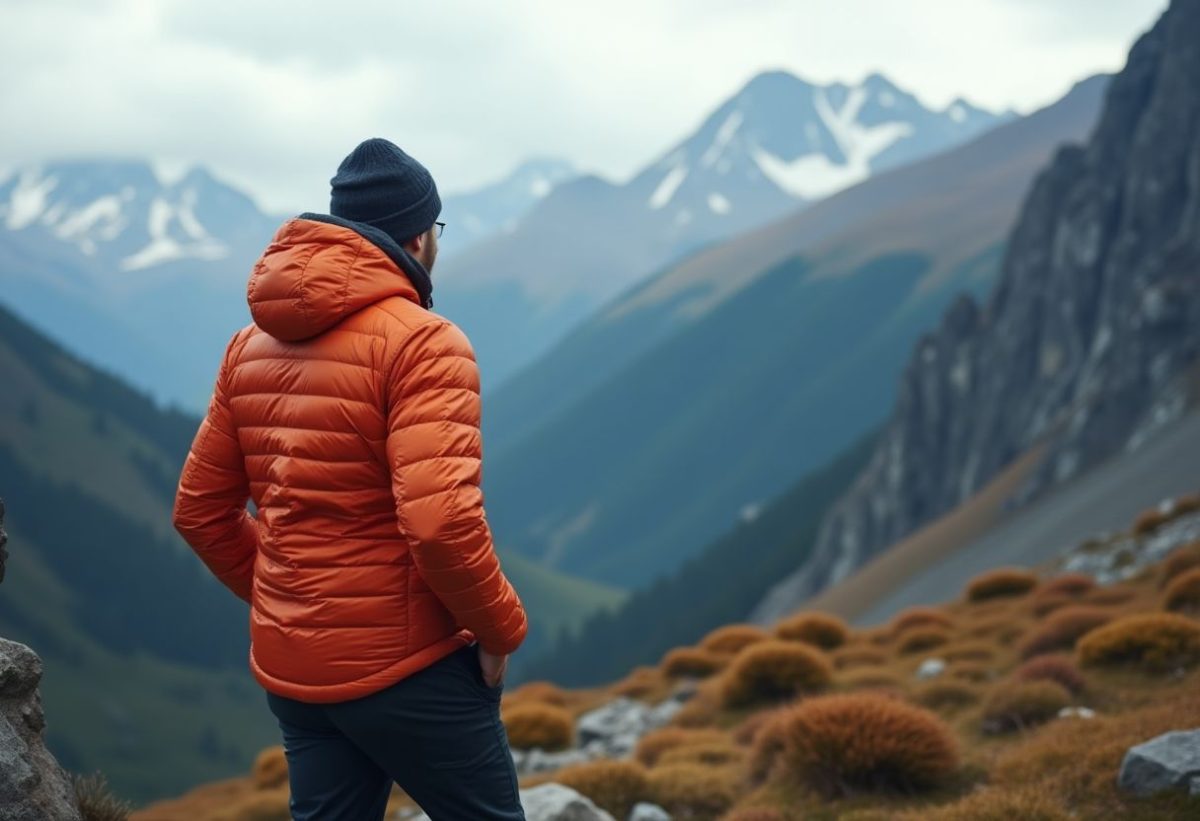
Climatic conditions play a determining role in the choice of jacket. The type of climate and the specific conditions of your hike will influence your decision.
For cold and dry climates, a women’s down jacket would be ideal, offering warmth and lightness. Conversely, in humid or rainy environments, opting for a synthetic jacket may be more prudent, as it continues to insulate even when wet. One might also consider a hybrid model, combining both materials to benefit from the advantages of each.
Environmental impact and ethics
The ecological impact and ethical considerations are increasingly important for environmentally conscious consumers. The sourcing of materials and how they are obtained are factors that influence the decision.
Down jackets raise questions regarding animal welfare. Choosing a jacket certified by ethical labels ensures that the down is sourced responsibly. Synthetic jackets, on the other hand, are often made from recycled materials, which helps reduce environmental impact. The choice between the two will depend on personal priorities and ethical values.
In summary, choosing between a down or synthetic jacket for hiking depends on many factors, ranging from personal priorities to climatic considerations. Each material has its own advantages and disadvantages, and the best option will be the one that best meets your specific needs and personal preferences. Whatever you choose, make sure your jacket meets the demands of your outdoor adventure.