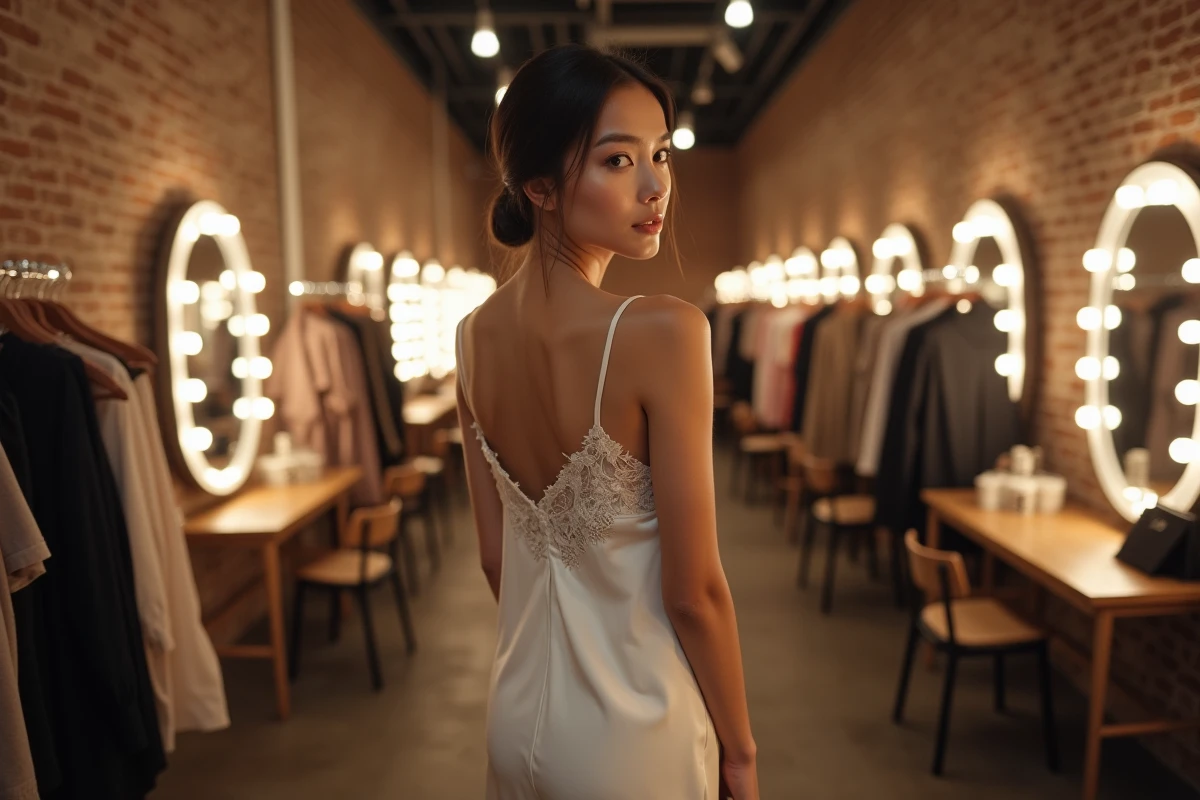
The threshold of 1.72 m minimum for women remains the standard applied by casting directors for runway shows, including for profiles without experience or agency. This standard has not changed in haute couture or high-end ready-to-wear for several decades, and open castings for new faces systematically maintain it as an entry filter.
Fitting model: when height no longer matters
The fitting model represents the professional segment where matching the brand’s measurements takes precedence over overall height. Bust, waist, hip measurements: these are the metrics that determine selection, not the centimeters displayed standing.
We observe that this niche absorbs an increasing share of the modeling workload. Ready-to-wear brands, mass retail chains, and e-commerce platforms need profiles calibrated to their standard size grids, often between French sizes 36 and 40. A fitting model that perfectly matches a brand’s pattern can work daily without ever stepping foot on a runway.
This position requires strict morphological stability. Gaining or losing a centimeter in hip measurement can be enough to lose a recurring contract. In contrast, measuring 1.65 m or 1.78 m has no impact if the other measurements align with the specifications.
Understanding the minimum height to be a female model involves distinguishing these circuits, as the fitting model market operates on criteria radically different from haute couture runway.

Size standards in haute couture runway: what castings really check
At a runway casting, the measuring stick remains the primary selection tool. Casting directors eliminate profiles below the required threshold before any stylistic evaluation. This filter applies even to castings labeled “new faces” or “open call,” where the 1.72 m criterion is non-negotiable.
The reason is technical. Runway garments are designed on a unique pattern, tailored for a slender silhouette. Altering a haute couture piece to fit a shorter frame compromises the proportions desired by the designer. Houses prefer a pool of interchangeable models on the same pattern rather than costly adjustments.
Complete measurements required beyond height
Height alone is not enough to pass a casting. Agencies and houses evaluate a set of standardized measurements:
- Bust measurement, generally expected to be around a narrow range corresponding to French sizes 34-36 for the luxury segment
- Waist measurement, monitored with the utmost rigor, as it conditions the drape of structured dresses and suits
- Hip measurement, which must remain proportional to the waist to ensure the fluidity of the garment in motion on the runway
- Leg length relative to the torso, a ratio often more decisive than raw height for runway appearance
We recommend aspiring models have their measurements taken by a professional (agency or tailor) rather than self-measuring. A discrepancy of a centimeter in waist measurement can tip the scales on a portfolio.
E-commerce, commercial, and freelance: circuits where size criteria fade
Commercial and e-commerce modeling now constitutes the largest employment volume in the sector. These segments recruit based on photogenicity and the ability to embody a customer target, not on a standardized haute couture frame.
Independent brands, online boutiques, and local advertising campaigns seek varied profiles. A model at 1.62 m with a strong visual presence and an appropriate portfolio can secure regular contracts in catalogs, lookbooks, or social media content.
Online presence and portfolio: the real selection levers
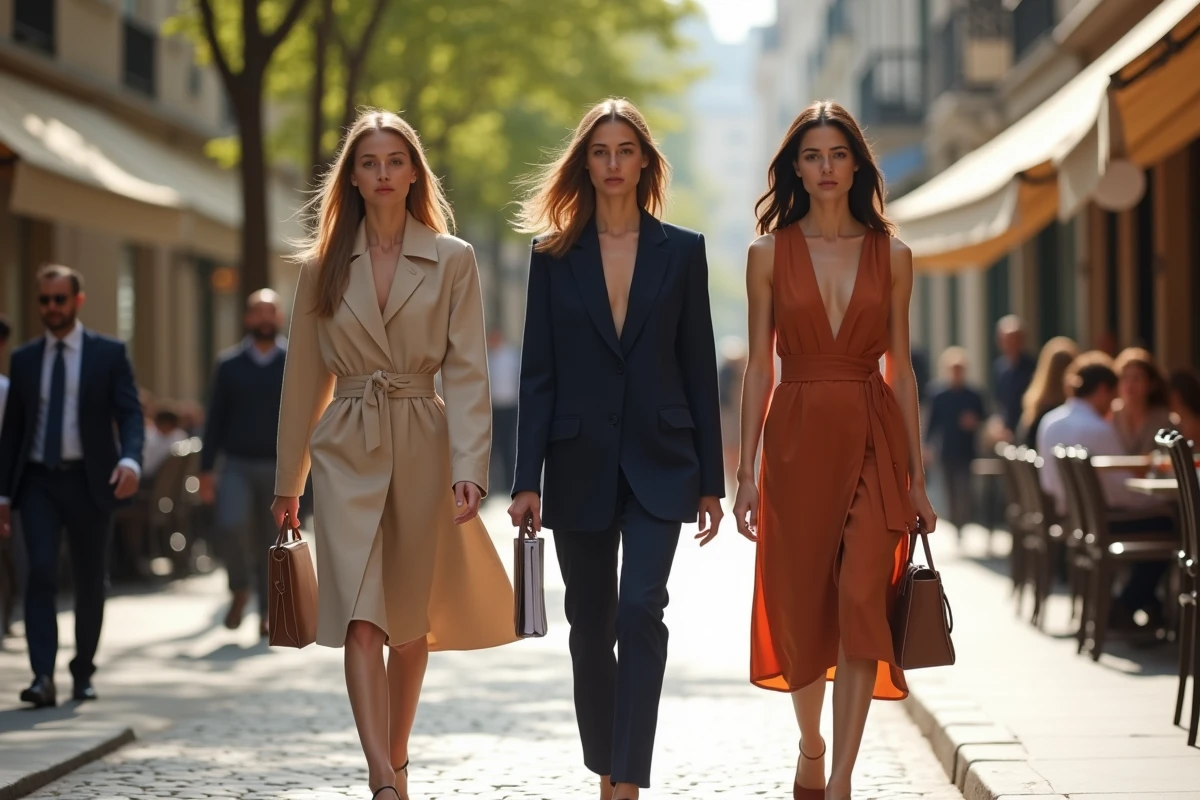
Professional sources converge on one point: a solid portfolio and a professional online presence replace the missing centimeters in these circuits. A coherent Instagram profile, with quality images and a clear editorial line, functions as a permanent portfolio accessible to casting directors.
Freelancing also allows bypassing agency filtering. Some models build their business directly with brands, without going through traditional selection grids. This model, however, requires management skills (billing, negotiation, logistics) that classic modeling delegates to the agency.
Non-physical criteria: what truly matters in the long run
Height opens or closes certain doors at the start. Over time, the criteria that determine a viable career are of another order.
- Punctuality and reliability: arriving on time, respecting fitting schedules, being available for last-minute callbacks
- Ability to follow a brief: quickly understanding what the photographer or stylist expects, adapting posture and expression without multiplying takes
- Morphological stability: maintaining measurements within the contractual range over several months
- Professional relational skills: not generating friction on a set where makeup artists, hairdressers, stylists, and artistic directors are involved
These behavioral criteria count as much as physical attributes for agency bookers, who manage the reputation of their roster in the long term. A technically perfect model but unmanageable on set will see her castings dry up quickly.
Female modeling is not just a number on a measuring stick. The threshold of 1.72 m remains a tough filter for haute couture runway, but it concerns only a fraction of the market. Fitting, commercial, e-commerce, and freelance operate on different grids, where detailed measurements, the portfolio, and professionalism prevail. Building a career by targeting the right segment from the start avoids years of unsuitable castings.