
The textile market is undergoing a period of rapid transformation. Between the rise of second-hand clothing, the introduction of environmental labeling in France since October 1, 2026, and the European ban on the destruction of unsold goods, clothing choices are no longer just a matter of aesthetics. Enhancing one’s look today requires understanding what lies behind the labels, the materials, and how one puts together an outfit.
Textile Materials and Comfort: What the Label Doesn’t Yet Reveal
Most fashion advice focuses on cut or color. The material, however, determines both the drape of the garment and the sensation on the skin, yet it often remains a blind spot.
Since October 1, 2026, a third party (consumer, association, or competitor) can calculate the environmental score of a garment based on basic information when the brand has not made it public itself. This mechanism changes the game: environmental labeling makes textile compositions more visible. A conventional cotton jean and an organic cotton jean will not display the same score, prompting some brands to rethink their fiber blends.
For those looking to improve their style, the practical consequence is direct. A garment that prioritizes natural or recycled fibers will tend to age better, maintain its shape longer, and offer better thermal comfort. Checking the composition label before purchasing is not a common reflex, but it is what distinguishes a sustainable wardrobe from an accumulation of disposable pieces.
Among the fashion tips on Style et Chic, this logic of reasoned choice is applied to the basics of the wardrobe, from jeans to dresses to accessories.
Second-Hand and Original Look: The Limits to Know
The French second-hand market grew in volume and value in 2025, according to a Refashion study published in September 2026. To create a unique look without blowing the budget, second-hand offers a wide playground: vintage pieces, cuts that are unavailable in stores, materials that current brands no longer offer.
The pitfall lies elsewhere. The environmental advantage of second-hand disappears if the purchase adds to regular consumption instead of replacing a new purchase. Refashion emphasizes this point. Buying three second-hand jackets in addition to the planned new clothes does not reduce the footprint, even if each piece costs less.
To enhance a look through second-hand, it is better to define a specific need before searching. A trench that is missing from the wardrobe, a pair of leather shoes to replace worn-out sneakers, a structured bag to add depth to a sober outfit. This targeted approach avoids accumulation and produces visible results on style.
How to Spot a Good Second-Hand Piece
- Check the seams, zippers, and buttons: a second-hand garment in good structural condition can be worn as long as a new one
- Examine the composition on the label: blends with more than 70% natural fibers retain their shape better after repeated washes
- Always try on, as sizes vary by era and brand, sometimes by two sizes for the same label
Colors and Silhouette: Building Coherence Without Changing Everything
Working with colors remains the quickest lever to transform an outfit. There’s no need to master complete color theory: three colors maximum per outfit are enough to create a readable ensemble.
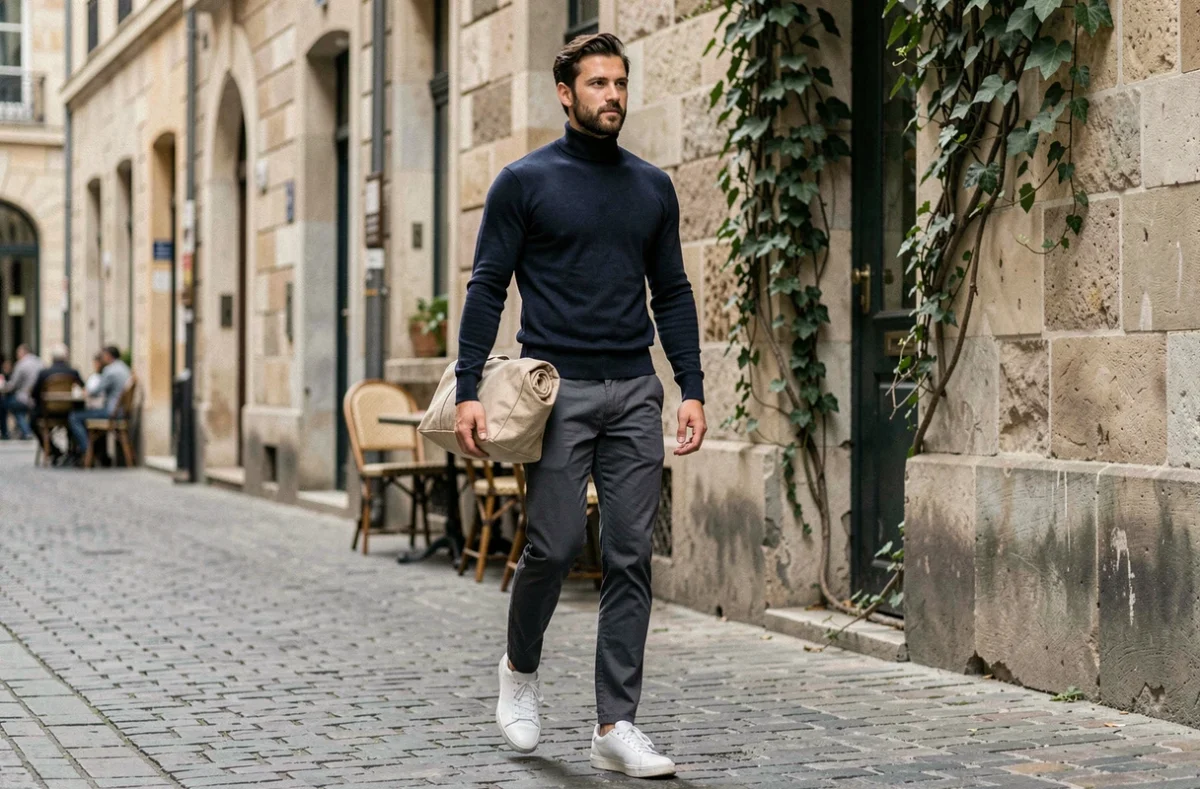
The principle is based on a relationship between base and accent. A neutral base (navy, gray, black, beige) occupies the majority of the silhouette. An accent color, worn on an accessory or a single piece, draws the eye where desired. Adding a third shade, close to the base or the accent, ties the whole together without overwhelming it.

The Role of Proportions in Style
The fit of clothing has a stronger impact on appearance than the brand or price. Pants that are too long that break on the shoe weigh down the silhouette. A top that is too loose at the shoulders gives an impression of floating. These details can often be corrected by a tailor for a few euros, and the result on the overall look is immediate.
A tailored garment in the right size changes the look more than a poorly fitted new garment. This is a point that purchase-centered advice often overlooks.
European Regulation and Destruction of Unsold Goods: A Signal for Buyers
Since 2026, the European Union has banned large companies from destroying unsold new clothing and shoes. This measure, stemming from the eco-design regulation, aims to reduce textile waste on a large scale.
For consumers, this regulation has an indirect consequence on style. Brands that can no longer destroy their stock are encouraged to produce fewer references, better calibrate their collections, and, in some cases, offer more frequent clearance sales. End-of-line sales become a relevant purchasing channel for quality pieces at reduced prices.
This regulatory context also encourages a different way of thinking. Buying fewer pieces, but better chosen, is no longer just a stylist’s advice: it is the direction in which the legal framework is steering the market. A wardrobe focused on versatile pieces, occasionally complemented by second-hand or clearance, produces more coherent outfits than a sprawling wardrobe where nothing matches.
Style is built as much by what is removed from the wardrobe as by what is added. In the coming months, with the generalization of environmental labeling and regulatory pressure on brands, this logic will become even more concrete for those who want a look that is both polished and sustainable.