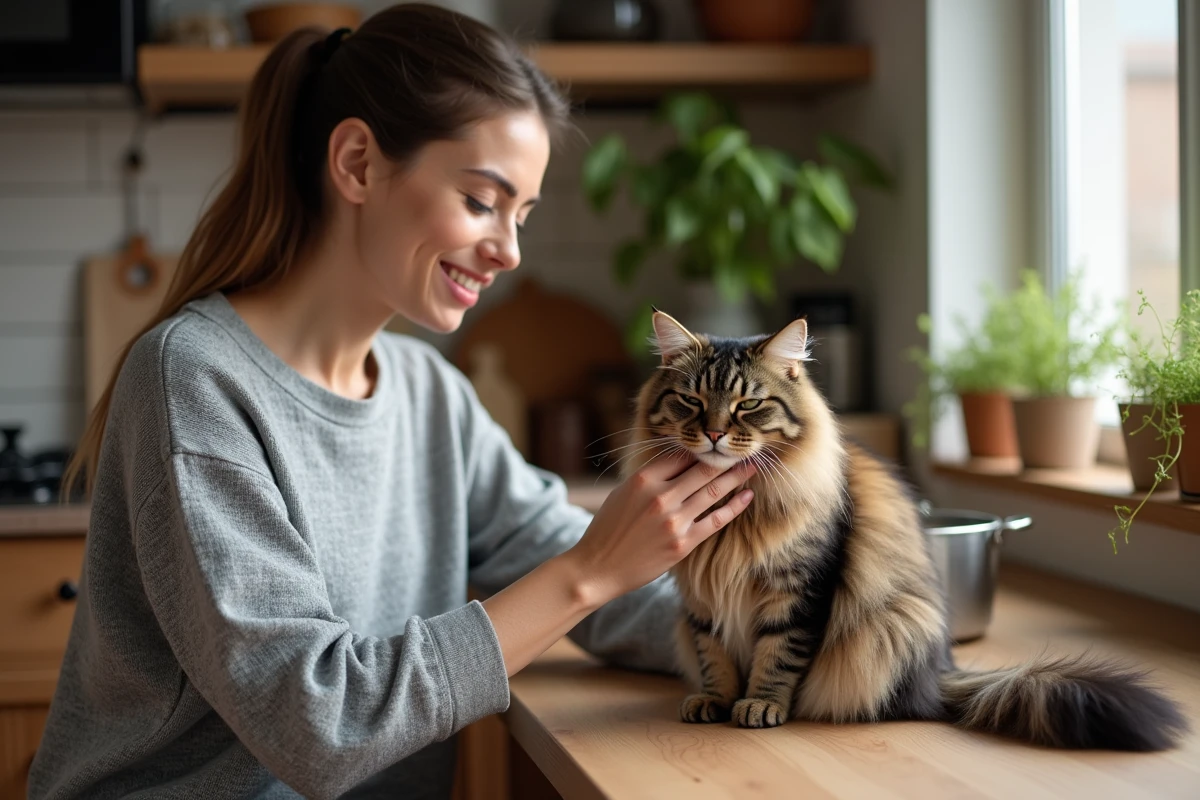
A cat that starts urinating outside its litter box, another that chews on electrical cables: these everyday situations almost always indicate an unmet need. Taking care of your cat begins with observing its habits, spotting subtle signals, and adjusting its environment before problems set in.
Mental stimulation for indoor cats: the most underestimated need
It is often thought that an apartment cat sleeps all day by nature. In reality, a feline that sleeps more than sixteen hours and shows no interest in its surroundings often compensates for a lack of cognitive stimulation.
Food puzzles change the game. Instead of filling a bowl morning and night, you can distribute kibble in several puzzle feeders. The cat must push, pull, or lift to access its food. The active search for food reduces boredom and limits weight gain.
Rotating toys works as well. Keeping three or four toys accessible and storing the others in a closet for a week is enough to renew interest. Scent trails (dried catnip hidden in tied socks, for example) engage a sense that owners often forget.
Environmental variations are just as important as toys: moving a cat tree near a different window, adding a cardboard hideout, or installing a wall shelf. A cat exploring a modified space activates the same circuits as an outdoor cat on the prowl. For everything about Amazing Pet Place, there are also additional resources on suitable arrangements for felines.
Cat hydration: beyond just a bowl of water
Cats descend from desert felines and retain a reflex for low water consumption. This genetic trait explains the frequency of urinary and kidney problems, especially in cats fed exclusively on kibble.
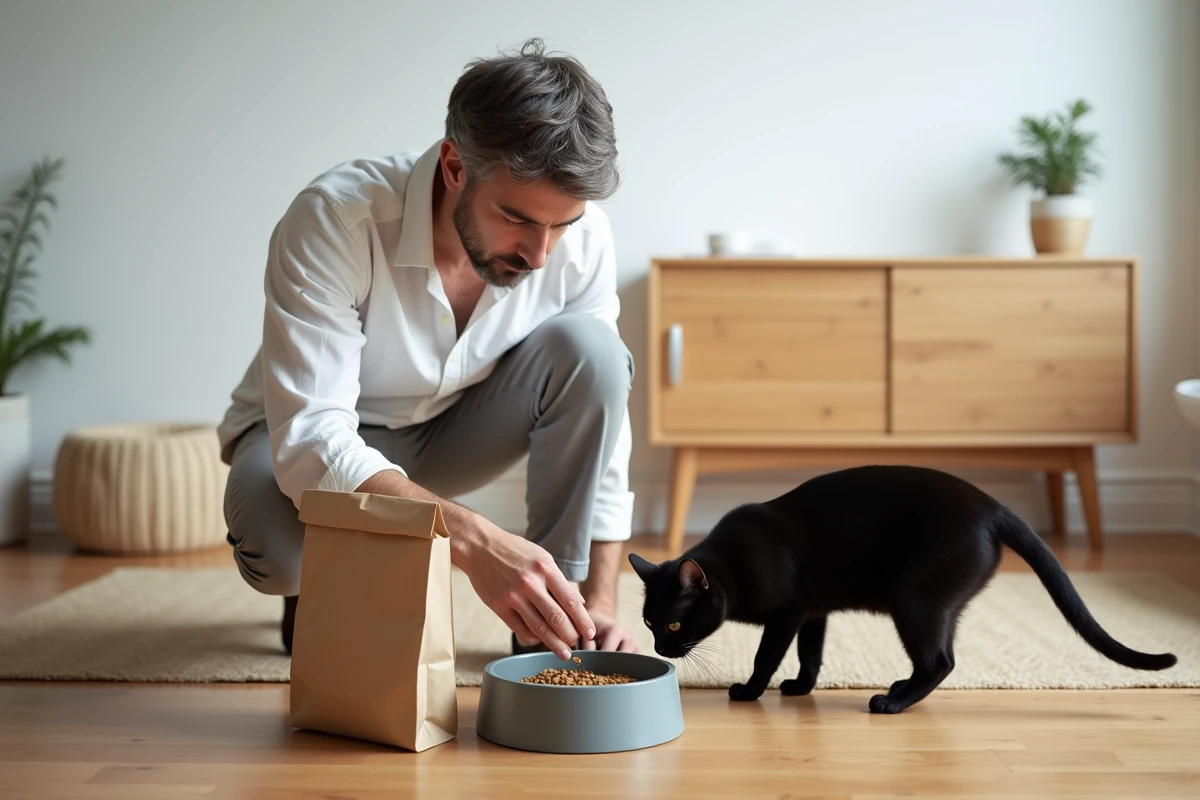
Increasing water points in the house is the first concrete action. A bowl in the kitchen and another in the hallway is sometimes enough to double consumption. The cat instinctively avoids water placed next to its food bowl or litter box.
Water fountains provide a continuous flow that attracts many felines. Feedback varies on this point: some cats adopt the fountain within hours, while others completely ignore it. You can test with a simple trickle of tap water before investing.
Wet food and additional tips
Alternating kibble and wet food increases water intake without forcing the cat to drink. Wet food contains a much higher proportion of water than dry kibble.
Some owners prepare unsalted chicken broth ice cubes in the summer. This trick encourages licking and provides an extra hydration boost during hot weather.
Feeding overweight cats: a precise protocol
A cat that gains weight slowly over several years eventually develops joint strain and an increased risk of diabetes. Abruptly reducing the ration does not work: a cat’s liver does not handle fasting well.
- Switch to a dietary food rich in protein and fiber, which maintains satiety without excess calories. Specific veterinary ranges exist for this situation.
- Eliminate commercial calorie-laden treats and replace them with small pieces of plain cooked meat, given as rewards during play sessions.
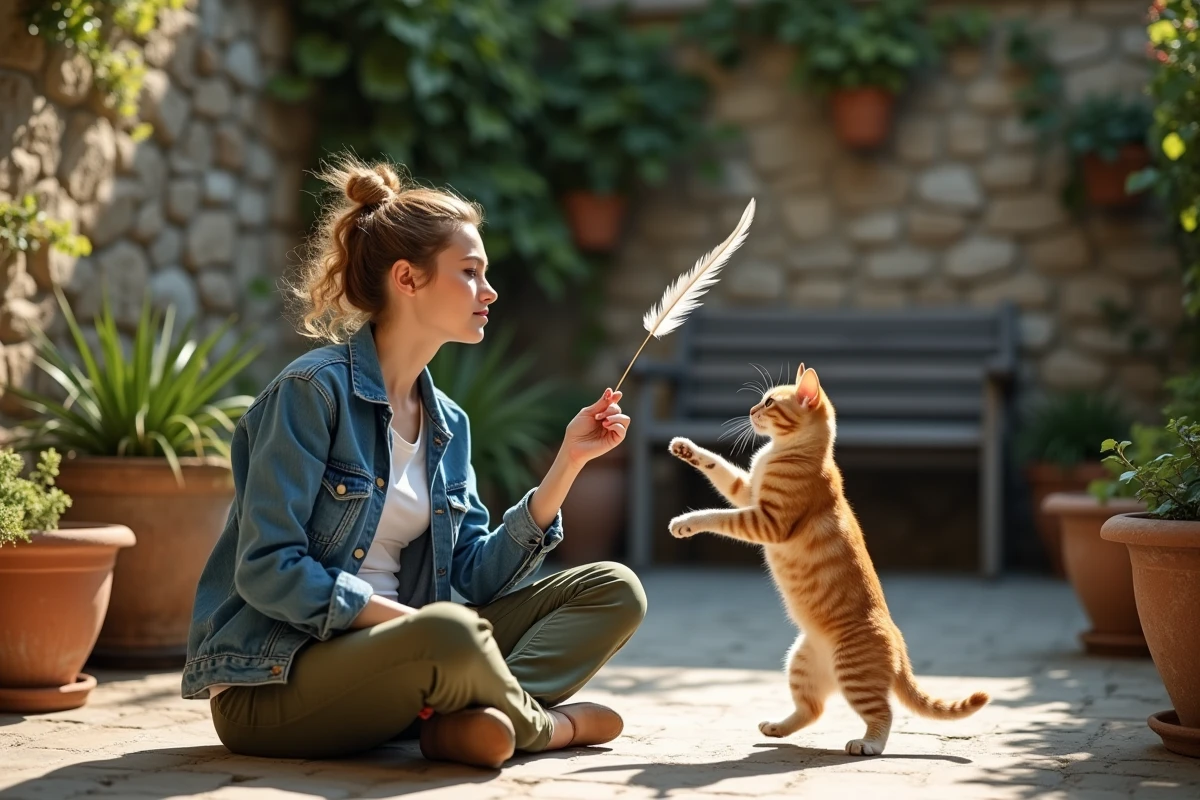
- Implement scheduled play sessions (two to three times a day, about ten minutes each) with a feather wand, fishing rod, or a ball that the cat must chase.
This combined protocol (adjusted diet and structured activity) yields gradual results. The goal is slow weight loss, visible over several months, never an express diet.
Litter box and sanitary environment: common mistakes
The litter box concentrates a good portion of a cat’s behavioral problems. A feline that refuses its litter box sends a clear message about its comfort or health.
Location and number of boxes
The rule often cited by veterinary behaviorists: one box per cat, plus one extra. In an apartment with two cats, you should therefore set up three boxes spread across different rooms. Placing the litter box in a high-traffic hallway or next to the washing machine generates stress.
Cleaning frequency and substrate choice
Removing waste at least once a day and changing the entire substrate weekly limits odors and refusals. Scented litters please humans, but rarely cats: their sense of smell perceives these scents as aggressive.
Clumping substrates make daily cleaning easier. Plant-based litters (wood, corn) are suitable for cats sensitive to mineral dust.
Veterinary follow-up for cats: when to consult outside of vaccination reminders
Annual vaccination visits are a minimum, not a ceiling. Certain signals warrant a quick consultation:
- Sudden change in appetite (refusal to eat for more than twenty-four hours, or conversely, sudden voracity).
- Change in urinary behavior: unusual frequency, presence of blood, urination outside the box.
- Visible weight loss without dietary changes, especially in the elderly cat where kidney and thyroid problems are common.
- Prolonged lethargy or sudden aggression in an otherwise sociable animal.
An annual blood test starting at seven or eight years of age can detect kidney or liver anomalies before visible symptoms appear. This preventive approach costs less than late curative treatment.
The daily care of a cat relies on a concrete triptych: an environment that stimulates, a diet that matches its actual physical state, and vigilance over small changes in behavior. The rest, including affection, comes naturally when these foundations are in place.