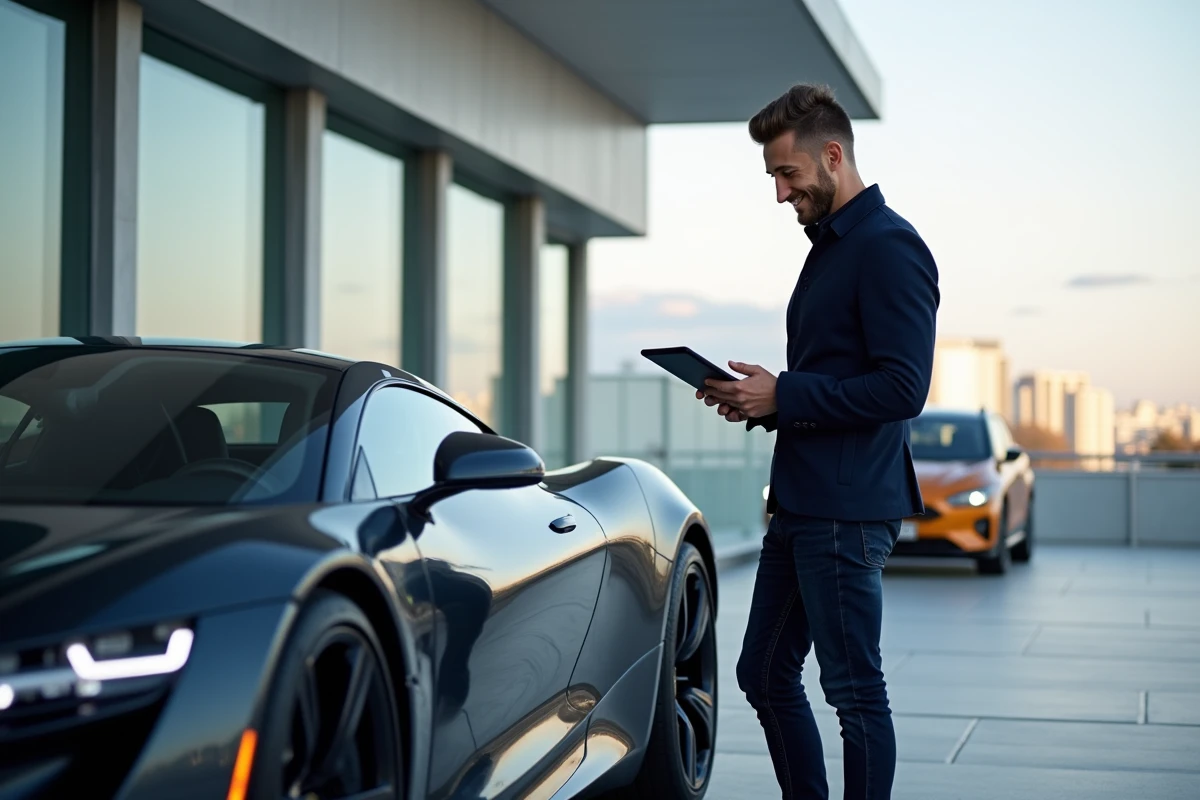
Automakers are now adjusting their ranges every six months, an unprecedented pace driven by the rise of electric powertrains and environmental regulations. The criteria for evaluating a classic car are also evolving, incorporating technological and aesthetic parameters that disrupt the hierarchy of models.
Some vehicles planned for 2025 already display unexpected features, while the tuning culture influences design and performance customization more than ever. The automotive sector’s ecosystem is rapidly transforming, requiring constant vigilance to stay informed about trends and opportunities to seize.
What new features and major trends will shape the automobile by 2030?
The automotive sector is buzzing, caught in an unprecedented wave of transformation. Electric cars, zero-emission SUVs, advanced hybridization: each manufacturer is reshuffling its cards, driven by technical revolution and environmental pressure. In France, Renault and Peugeot are leading the way, reinventing their models to combine energy efficiency and European requirements. Battery-powered vehicles are being equipped with increasingly sophisticated features, from connected cockpits to rethought ergonomics.
The auto trends of recent months highlight the rise of compact models, designed for the city, while reigniting the flame of sports cars. Ferrari and BMW, among others, are racing towards innovation, combining cutting-edge chassis with electric propulsion. From one end of the continent to the other, from Asia to Europe, each market player is shaping the contours of tomorrow in their own way, seeking a balance between performance and compliance with regulatory constraints.
To better understand what is shaking up the industry, here are three key areas to watch closely:
- Embedded technology: the emergence of artificial intelligence is reshuffling the driving landscape, promising safer vehicles that can adapt to each driver.
- New car market: flexibility is becoming essential, thanks to modular platforms and models designed to evolve throughout their lifecycle.
- Sustainable mobility: while electric cars are becoming the norm, the question of infrastructure remains a significant challenge to support this transition.
For those who feel the pulse of the engine, the passion for automobiles is experienced as a constant vigilance. Following market trends, feeding on varied sources such as reading articles on Blog Automobile, comparing innovations at Hyundai, Audi, Volkswagen, or Tesla: all of this becomes instinctive. The industry is opening up to new uses, and the new vehicles arriving tomorrow will have little in common with those of yesterday. A more pragmatic mobility, more aware of its effects, but which continues to cultivate mechanical magic.
Classic cars: how to spot future iconic models and assess their value
What attracts people to classic cars is this blend of passion, hunter instinct, and industrial memory. Finding the future icon requires a sharp eye and solid market knowledge. Enthusiasts scrutinize limited editions, unprecedented collaborations, and technical or aesthetic innovations. Sometimes, a model deemed ordinary at its launch becomes a reference decades later. Take the Renault Clio: discreet in the 90s, its sporty Gti or Williams versions are now highly sought after, just like the Porsche Carrera GT, which is in high demand among connoisseurs.
Evaluating a classic car involves a real methodology. It is not enough to rely on intuition. One must consider the authenticity of the model, its condition, its complete history, the rarity of its production, and the impact it had at its time. Purists prefer unmodified examples, with a complete maintenance log and controlled mileage. Major auction houses are also observing a resurgence of interest in models from the 80s and 90s, a pivotal period marked by bold design and the rise of accessible performance.
To better understand the factors that influence value, here are two trends to know:
- International demand: certain models resonate with collectors worldwide, such as the Ford GT or the Clio V6.
- Evolution of uses: laws regarding the environment, taxation, or the status of used cars now weigh heavily in the balance.
Investing in a classic car requires preparation. One must verify provenance, documentation, and the possibility of ensuring long-term maintenance. The market appreciates originality, but it also rewards patience: a model overlooked today could very well become the sought-after trophy of the coming decades.

The tuning culture, an innovation driver to follow to stay up to date
Tuning is no longer limited to flashy customization. It is a true laboratory of ideas for the automotive industry. Enthusiasts of sports cars and city cars are embracing innovations, testing new materials, adopting LED lighting, and experimenting with connectivity before it becomes mainstream in new vehicles.
In Paris and other creative metropolises, the tuning scene is asserting itself: reworked bodywork, sculpted rims, chameleon paints, custom interiors. Independent garages are becoming experimental workshops. Renault, Mazda, or Toyota bases are used for these transformations, including hybrid city cars and electric vehicles. Tuning is evolving, integrating compact batteries, refining aerodynamics, and developing cooling kits suited to new powertrains.
To illustrate the diversity of these practices, here are some emerging trends:
- Aesthetic innovation: thermochromic colors, satin wraps, and carbon fiber elements are increasingly appealing to enthusiasts.
- Performance: electronic reprogramming, lightweight brakes, intelligent suspensions, every detail matters for sporty or daily driving.
- Maintenance and repairs: specialized preparers are evolving their techniques to adapt to new materials and the constraints of electrification.
This tuning dynamic is capturing the attention of manufacturers and suppliers. Michelin, for example, is partnering with some garages to design tires that meet these new demands. Ideas born in the tuning world are gradually permeating the industry, inspiring upcoming models and reminding us that the passion for automobiles is never done reinventing itself.