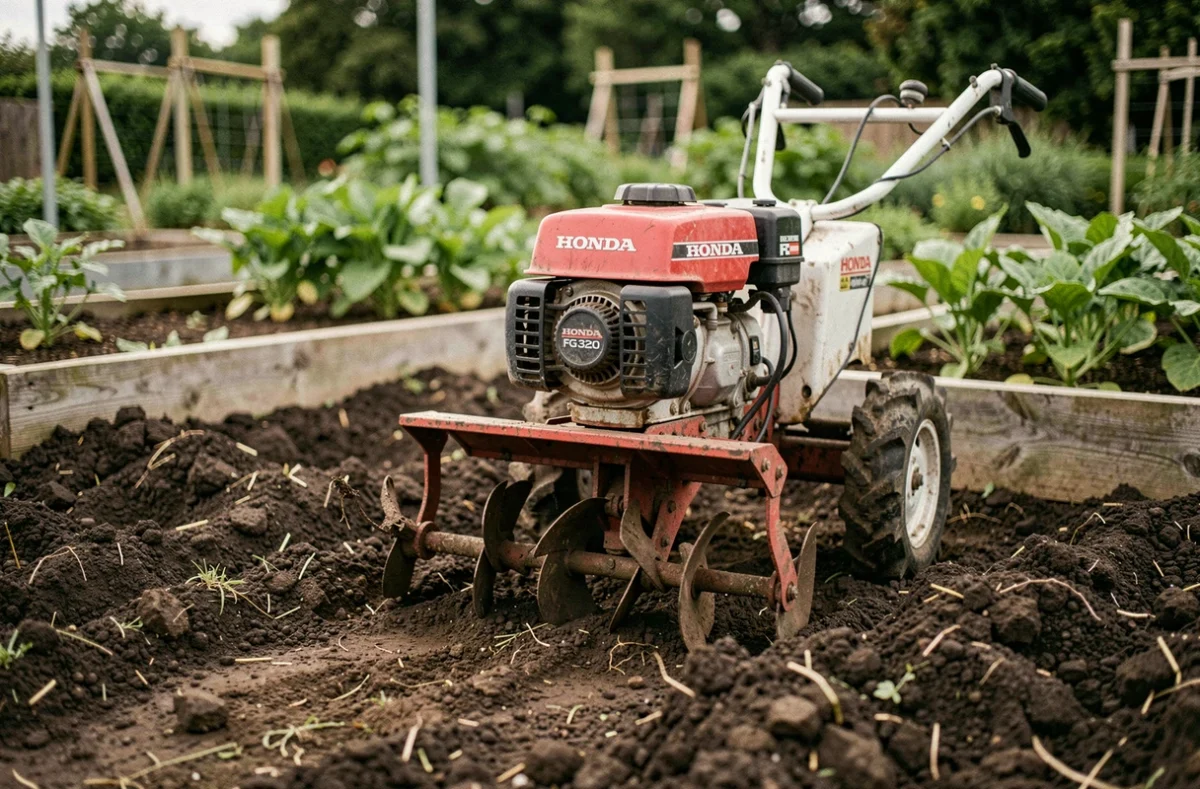
The Honda FG 320 occupies a distinctive niche in the range of petrol-powered tillers: compact machines equipped with a four-stroke engine and reverse gear, two features rarely found together in this segment. It is aimed at home gardeners with medium-sized plots, but user feedback reveals limitations that aren’t apparent from the specifications alone.
Honda GX 25 engine and transmission: what the specifications don’t tell you
The FG 320 is powered by a single-cylinder GX 25 four-stroke engine. Its main advantage is that it doesn’t require an oil-and-petrol mix, unlike the two-stroke engines still common in competing tillers. It starts with a manual pull cord, with no electric starter.
The machine has one forward gear and one reverse gear. Reverse runs the tines at a slower speed, which is useful for more than just freeing the machine in heavy soil. It also lets you turn around at the end of a row without lifting the machine—a practical advantage in narrow vegetable gardens or long plots.
One point to bear in mind: there’s no low-speed forward gear. One French buyer noted this shortcoming, saying that finer speed control would be useful when working near delicate plants. This is just one user’s experience, but it highlights a design trade-off. Higher-end Honda models offer more speed settings, which may be worth considering if precise control matters more than compactness.
For a detailed assessment of its performance in the garden, the Honda FG 320 tiller has been put through a full test that usefully complements the manufacturer’s specifications.
Honda FG 320 weight and manoeuvrability: check the figures
The listed weight of the FG 320 varies from one retailer’s specifications to another. Some include the tines and protective cover, while others give the weight without attachments. This inconsistency makes direct comparisons of manoeuvrability with competing models unreliable if you rely on a single figure without checking what it includes.
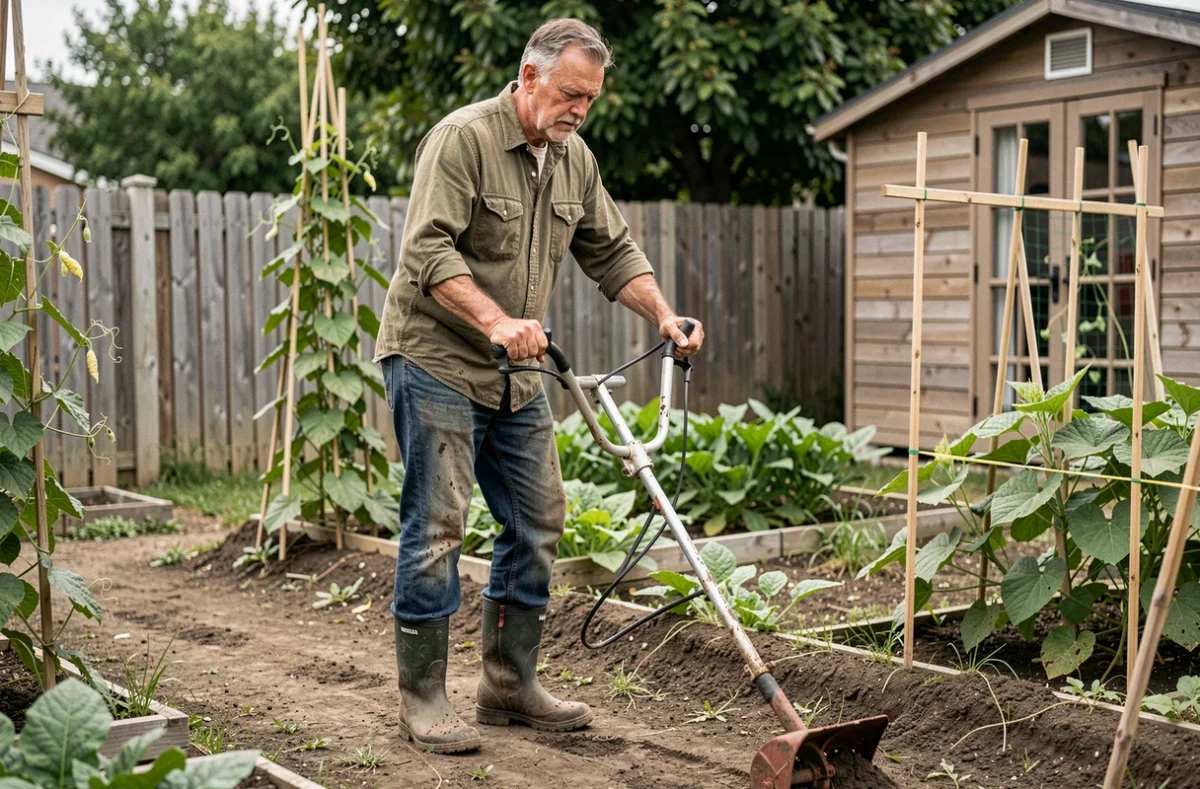
In practice, the FG 320 is light enough for one person to transport in a car boot. Its compact size sets it apart from rear-tine tillers, which are much bulkier. The handlebar is adjustable, allowing you to tailor your working position to your height.
Tines and working width
The effective working width depends on the tine configuration. The FG 320’s working width can be adjusted, but compatible accessories vary by retailer. Before buying, it’s best to check directly with the dealer which tine sets are available and included as standard.
Getting ready for the first start: an often-overlooked step
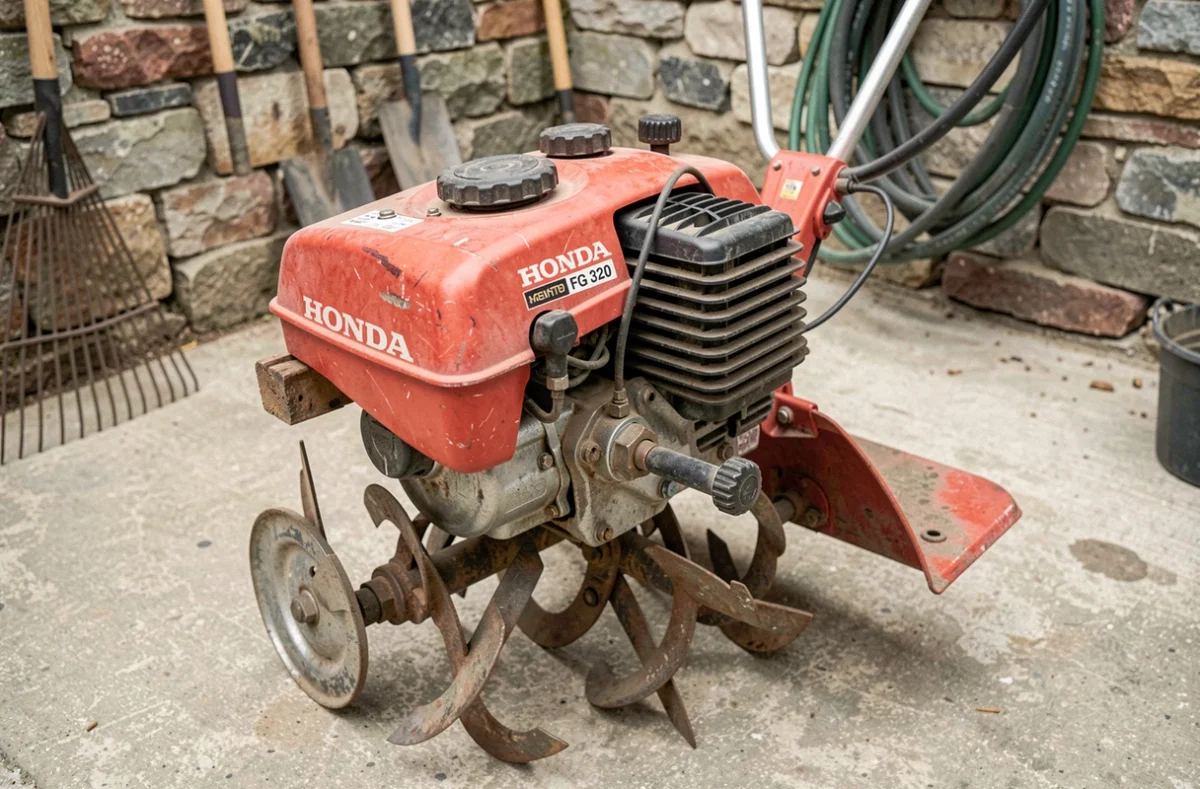
Several buyers mention that initial assembly and adding engine oil are required before first use. The machine doesn’t arrive ready to start. You’ll need to assemble the handlebar, attach the tines and fill the crankcase with the amount and grade of oil recommended by Honda.
One review on an overseas retail site describes difficulty starting the machine because the oil hadn’t been added. The GX 25 engine has an oil alert system that prevents it from starting if the oil level is too low. This protects the engine, but can catch a user in a hurry off guard. Reading the manual before pulling the starter cord helps avoid this kind of surprise.
- Check the engine oil level and use the grade recommended by Honda before starting the machine
- Assemble the handlebar and tines in the order specified in the manual; some fasteners require a precise torque
- Test reverse with the machine unloaded to make sure the clutch engages properly before tackling hard ground
Ground conditions and limitations: where the FG 320 falls short
On loose, previously worked soil, the FG 320 does a good job of breaking up clods and mixing in compost. That’s where it performs best: maintaining a vegetable garden, preparing planting beds and incorporating surface amendments.
On compacted clay or land that hasn’t been worked for several seasons, the machine reaches its limits. The GX 25 doesn’t have enough power to break through a thick crust in a single pass. You’ll need to make several passes, which slows the work and puts more strain on the machine.
For areas of more than a few hundred square metres or very heavy soil, a rear-tine tiller with a larger engine is a better choice. The FG 320 isn’t a substitute for a tiller; it complements existing equipment or suits smaller gardens.
Alternatives to consider
Specialist gardening forums often discuss whether to choose the FG 320 or a competing model with more power or additional speed settings. The deciding factors are the type of soil and the area to be worked:
- Light soil and a small vegetable garden: the FG 320 is more than adequate, thanks to its compact size and reverse gear
- Clay soil or a medium-sized area: a model with several forward speeds offers better control
- Large area or uncultivated land: go straight for a rear-tine tiller; a rotary tiller is no longer suitable
The FG 320 is a reliable machine backed by the reputation of the Honda GX engine, but its ideal range of uses is narrower than retailer listings suggest. Carefully assessing your soil type and the size of the area before buying can help you avoid disappointment—something neither the brand nor the price can make up for.