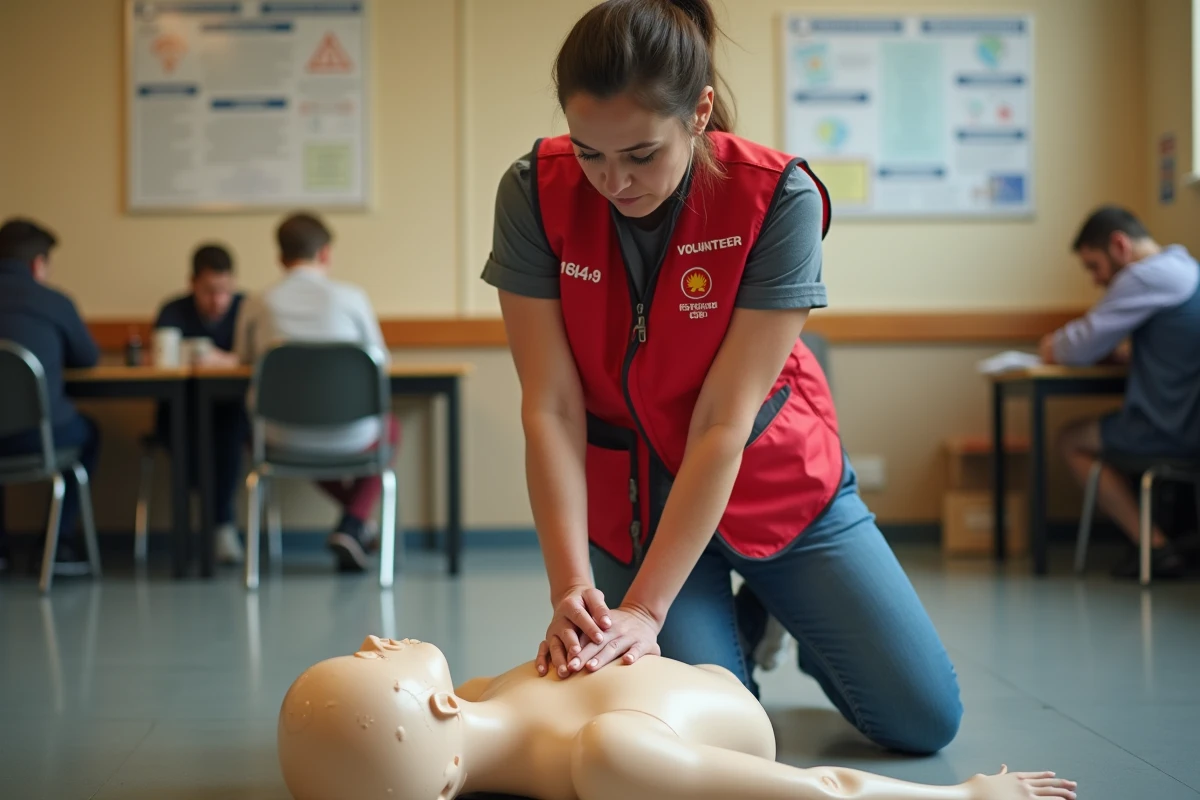
In France, the majority of the population has never received first aid training. In the event of a cardiac arrest, choking, or hemorrhage, the first few minutes often determine the outcome. However, first aid techniques remain poorly mastered, even in contexts where they are legally required, such as in the workplace or on the road.
The 114, an emergency number still too little known
Everyone knows 15 (SAMU), 18 (firefighters), and 112 (European emergency). However, 114, the emergency number by SMS, remains largely unknown to the general public. This service allows deaf or hard-of-hearing individuals to contact emergency services via text message or fax.
Its use is not limited to hearing impairments. In situations where speaking out loud would put someone in danger (domestic violence, intrusion), 114 offers a concrete alternative. Recent programs in the Highway Code now include this number in their first aid modules, alongside the trio 15/17/18.
Mastering the first aid techniques to know also involves knowing how to alert correctly, by describing the situation accurately: number of victims, nature of the problem, exact location.
Workplace first aid training: a poorly applied obligation
The Labor Code requires employers to organize first aid on the worksite. The Workplace First Aider (SST) training meets this obligation. It lasts two days and covers cardiopulmonary resuscitation, hemorrhage control, the recovery position, and the use of a defibrillator.
A often overlooked point: this training requires regular refreshers to maintain skills. An employee trained five years ago without a refresher has likely forgotten the correct sequence of chest compressions or the recommended frequency.
Field reports vary on the actual number of SST-trained employees in small organizations. The obligation exists, but its application varies significantly from one sector to another. Construction or industrial companies generally have more trained personnel than office environments, where the perceived risk remains low.
Cardiac arrest and chest compressions: the technique that poses problems
Most online content describes cardiac massage in a few lines. The practical reality is more complex. Insufficient or poorly positioned compressions drastically reduce the chances of survival.
The hands should be placed at the center of the chest, one on top of the other, with arms straight. The target rhythm is between 100 and 120 compressions per minute, which corresponds to a sustained tempo. The depth of compression should be sufficient without being excessive, a balance that is difficult to find without practice on a mannequin.
The use of an automated external defibrillator (AED) complements compressions. These devices, increasingly found in public places, guide the user with voice instructions. However, locating the nearest AED in a stressful situation remains a concrete obstacle. Few people know where the defibrillator in their building or train station is located.
Choking, hemorrhage, malaise: distinguishing what constitutes a vital emergency

Not all accidents require the same response. Knowing how to assess the severity of a situation determines the appropriateness of the action. A person who is still coughing during a partial choking does not need the Heimlich maneuver. However, if they can no longer make a sound, intervention must be immediate.
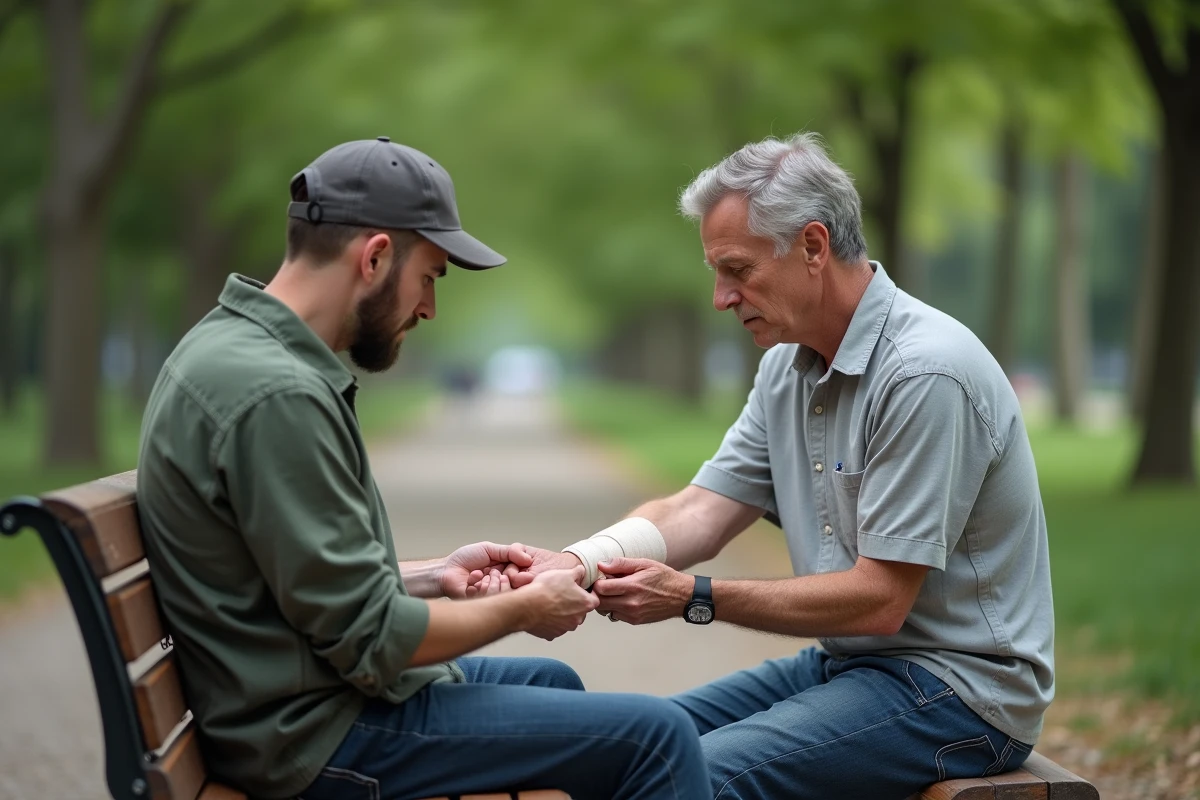
For hemorrhages, the basic reflex is to apply direct pressure to the wound with a clean cloth, maintaining constant pressure. Three common mistakes:
- Removing the cloth to check if the bleeding has stopped, which reignites the hemorrhage
- Applying a tourniquet without training, risking tissue damage downstream
- Laying the victim flat without elevating the affected limb when the situation allows
In the case of malaise, the priority is to gather information. How long has the person been in this state? Are they on medication? Do they have a history of heart problems? This information, relayed to SAMU during the call, allows emergency services to adapt their intervention even before arriving on site.
Recovery position: a simple gesture but often poorly executed
The recovery position concerns an unconscious victim who is still breathing. Its purpose is to prevent airway obstruction by the tongue or vomit. The person is placed on their side, with their mouth open facing the ground, arms and legs forming stable supports.
Two precautions to keep in mind:
- Never place someone suspected of spinal trauma (fall from height, road accident) in the recovery position, unless airway maintenance is required
- Regularly check that breathing continues while waiting for help, as the condition of an unconscious victim can change at any moment
- Tilt the head back before checking for breathing, to clear the airway
Practical training remains the only reliable way to acquire this gesture. Reading a description is not enough: hand placement, body rotation, and limb stabilization require physical training that written or video materials cannot replace.
Modules integrated into driving licenses and sessions offered by civil safety associations allow for the acquisition of these reflexes in a short time. Skills are lost without regular practice, which advocates for spaced revisions rather than a one-time training that is never refreshed.