
When observing a dog reacting to our voice, one quickly notices that it picks up certain sounds better than others. Its ears pivot, its head tilts, it distinguishes “sit” from “lie down” without hesitation. Canine language does not rely on an alphabet, but the way dogs perceive and produce sounds leaves certain “letters” aside, both literally and figuratively.
This peculiarity reveals how their vocal apparatus functions and what their brain prioritizes when processing a sound signal.
Dog Vocal Apparatus: Why Certain Sounds Are Physically Impossible
A barking, whining, or growling dog uses a larynx, vocal cords, and a mouth cavity. The mechanics are comparable to ours in broad terms, but structural differences change everything.
The dog’s tongue, thicker and less mobile than the human tongue, cannot position itself against the palate or teeth with the precision required to articulate consonants like “t,” “d,” or “l.” The lips, less muscular compared to ours, do not form bilabial sounds (“b,” “p,” “m”) in a controlled manner.
As a result: the dog cannot produce any articulated consonant. Its vocalizations are limited to variations in pitch, duration, and intensity on open vowels and breath sounds. You can hear stretched “a,” “ou,” and “i” in howls, but never a clear “k” or a distinct “f.” These letters absent in dogs are not due to a lack of vocal intelligence, but rather a pure anatomical constraint.
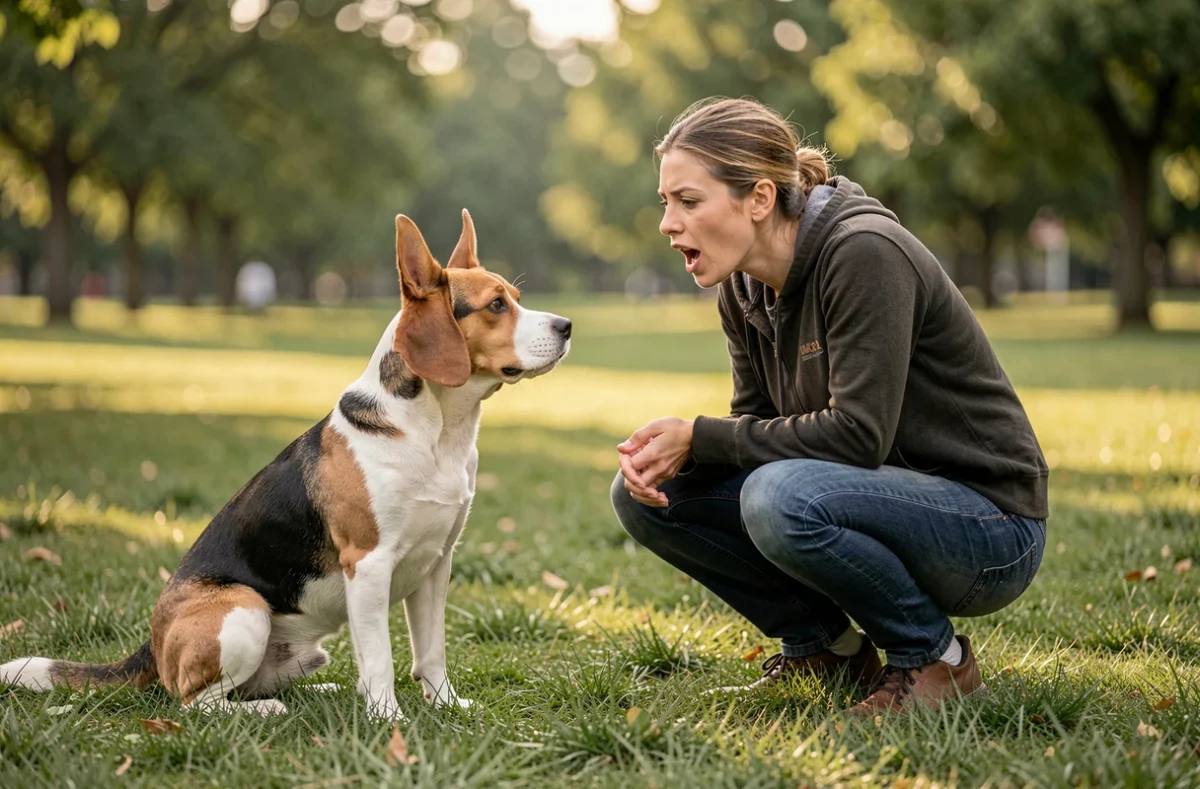
Perception of Human Words: What the Canine Brain Really Filters
If the dog does not produce these sounds, does it perceive them when we speak? The answer is more nuanced than a simple yes or no.
Recent work in animal cognition shows that dogs encode the sound shape of words with unexpected finesse. They distinguish very phonetically similar pseudo-words, which means they do not merely capture the overall intonation of a sentence. Their brain indeed analyzes the structure of syllables.
On the other hand, a study published in 2026 in Animal Cognition by Attila Andics’ team (Eötvös Loránd University, Budapest) demonstrated a clear perceptual bias: dogs react more strongly to canine vocalizations than to human voices. The habituation-dis-habituation protocol used showed that varying barks provokes a more marked reaction than varying human voices or instrumental sounds.
Specifically, when we say “sit” to our dog, it recognizes the overall sound pattern of the word, but its auditory system remains primarily calibrated to the frequencies and modulations typical of its own species. The consonants we articulate are perceived, but they do not constitute the primary channel of its attention.
Canine Communication Buttons: When Dogs “Choose” Words
Soundboard devices allow dogs to press buttons associated with recorded words. This experimental ground provides concrete insights into how they manipulate human language.
FluentPet, one of the most widely used systems, has analyzed several tens of millions of button presses. The data reveal clear trends:
- Dogs primarily use short words, often consisting of one or two syllables with open vowels (“outside,” “play,” “water”).
- Words with complex consonants or tight consonant clusters are less consistently selected, likely because their sound pattern is more difficult for the animal to discriminate.
- The frequency of button use correlates more with motivation (hunger, play, going out) than with the phonetic complexity of the recorded word, but the most “canine” sounding words are learned faster.
We cannot conclude that the dog “prefers” certain letters, but feedback varies on this point and research is still young. What emerges is that the dog’s phonological system directs its learning towards sounds it can also produce or at least easily recognize.
Vocal Behavior and Stress: What Absent Sounds Reveal About Emotional State
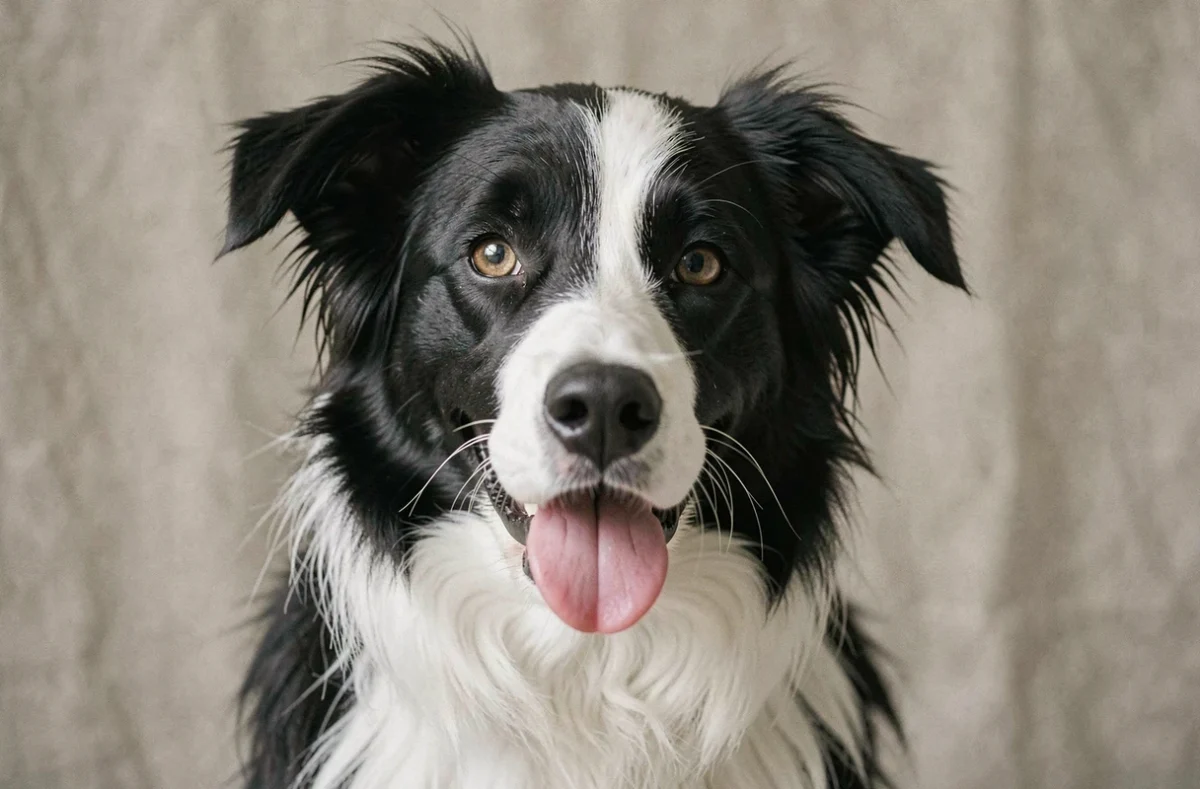
A stressed or anxious dog modifies its vocalizations. Whines increase in frequency, barks become closer together, and growling may appear. All these sounds remain within the range that its vocal apparatus allows: modulated vowels, breath sounds, laryngeal vibrations.
The absence of articulated sounds makes the dog’s vocal repertoire more context-dependent. The same whine can signify pain, excitement, or frustration. It is the situation, body posture, and emitted scent that clarify the ambiguity, not the sound itself.
For the owner in daily life, this reality has a practical consequence: relying solely on the sound produced by the dog to assess its emotional state leads to misinterpretations. A dog that “talks” a lot does not necessarily express well-being. A silent dog is not necessarily calm.
Complementary Signals to Observe
- The position of the ears and tail indicates the level of excitement or fear, regardless of the sound emitted.
- Rapid panting without prior physical effort often indicates underlying stress or anxiety.
- Licking lips outside of a food context is a frequent calming signal in dogs in discomfort.
These body markers precisely compensate for what the dog’s voice cannot express on its own. Canine language is multimodal by necessity, not by choice.
The absent letters in the dog’s vocal repertoire are not a flaw in its communication system. They reflect a different specialization: where we have developed a vocal apparatus capable of producing dozens of distinct phonemes, the dog has retained a system oriented towards sound reach, speed of emission, and complementarity with body and olfactory language.
Understanding this logic allows us to better adapt our own way of communicating with our companion, prioritizing short commands, clear vowels, and consistency between tone and gesture.